Learning Chinese characters can feel overwhelming at first. There are thousands of them, and they all look like intricate puzzles. The good news is that most characters are built from smaller components called radicals (部首, bùshǒu). Once you learn to spot them, you stop seeing random strokes and start seeing a logical system. This guide walks you through the most useful radicals, what they mean, and how to make them stick in your memory.
What Is a Radical?
A radical is a core component shared by a group of Chinese characters. Every character in a Chinese dictionary is indexed under one radical. Radicals often carry meaning, giving you a clue about what a character refers to. Think of them like roots in English: knowing that "bio-" relates to life helps you guess "biology" or "biography." Radicals work the same way.
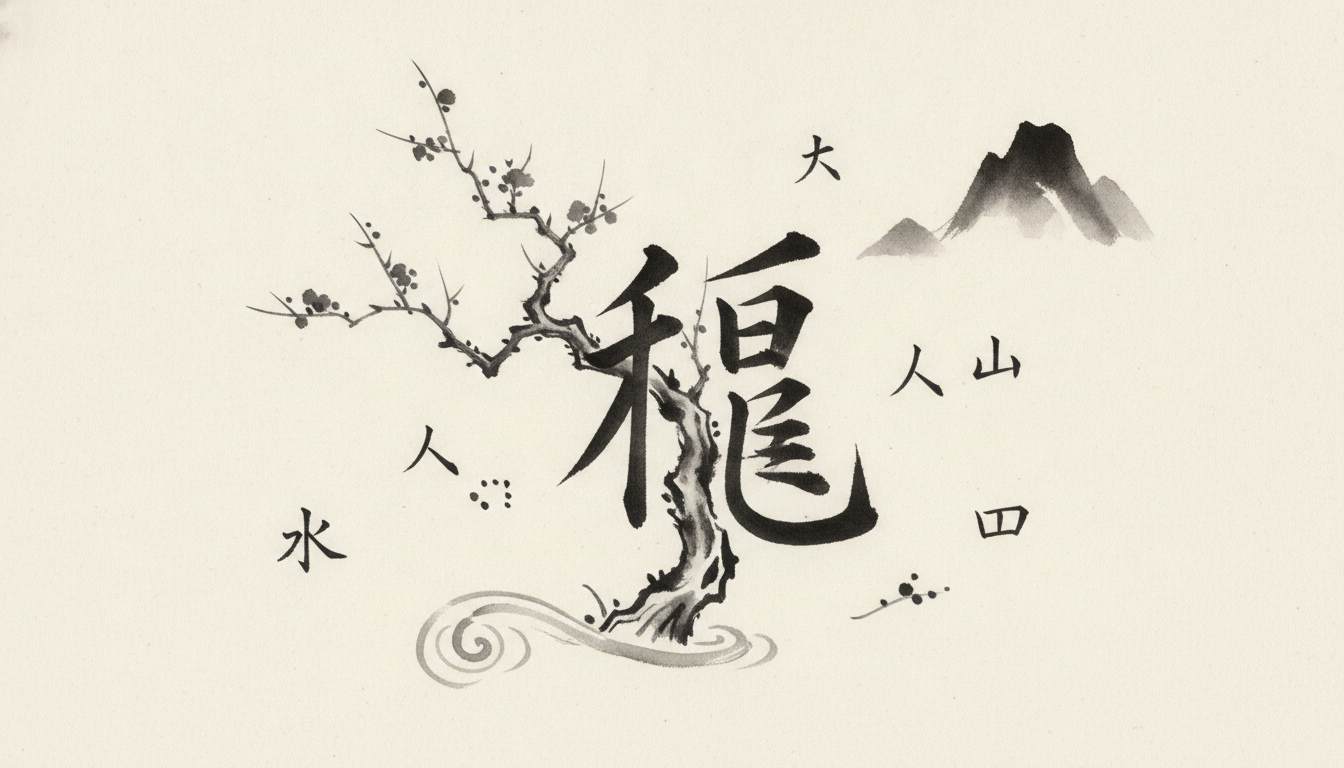
For example, the radical 水shuǐ (shuǐ, "water") appears in a modified form in many water-related characters:
- 河 (hé) - river
- 海 (hǎi) - sea
- 游 (yóu) - to swim
When you see the three-dot version of this radical (氵) on the left side of a character, you can immediately guess the character has something to do with liquid or water. That single insight unlocks dozens of characters at once.
The Most Useful Radicals to Learn First
Here are some shui high-frequency radicals worth memorizing early:
氵(water) - found in 河, 海, 洗 (xǐ, to wash), 泳 (yǒng, swimming). Picture water dripping in three drops.
木 (tree/wood) - found in 树shù (shù, tree), 桌 (zhuō, table), 椅 (yǐ, chair). Imagine a tree with roots and branches.
口 (mouth) - found in 吃chī (chī, to eat), 喝 (hē, to drink), 叫 (jiào, to call/shout). It looks like an open mouth, which makes it easy to visualize.
人/亻(person) - found in 他tā (tā, he), 你 (nǐ, you), 们 (men, plural marker). The standing figure radical appears constantly in characters about people and human actions.
女 (woman) - found in 妈 (mā, mom), 姐 (jiě, older sister), 她 (tā, she). Many family and gender-related characters use this radical.
日 (sun/day) - found in 明míng (míng, bright), 时 (shí, time), 晴 (qíng, sunny). The sun connection makes many of these meanings intuitive.
心/忄(heart/feelings) - found in 想 (xiǎng, to think/miss), 忙 (máng, busy), 怕 (pà, to fear). Emotional and mental states often carry this radical.
Memory Tricks That Actually Work
Knowing a radical exists is one thing. Remembering it reliably is another. Here are techniques that work for different learners.
Use visual stories. The radical 木 looks like a tree: a vertical trunk with a horizontal branch crossing it. The character 森 (sēn, forest) is three 木 stacked together. Three trees make a forest! These mini-stories lodge in memory far better than rote repetition.
Group characters by radical. Instead of learning 洗, 河, and 海 as three separate words, learn them as a family. Write them side by side and circle the shared 氵each time. Your brain loves patterns, and grouping activates that recognition.
Write them by hand. This might sound old-fashioned, but tracing strokes builds muscle memory that handwriting reinforces visual recognition. Even writing a radical ten times while saying it aloud creates a stronger mental anchor than passive reading.
Use flashcards with context. Rather than a card that just shows 木 and says "wood," make a card showing 木 in the middle of 桌子 (桌子zhuō zi, zhuōzi, table). Seeing the radical in action is more powerful than seeing it in isolation.
How Radicals Hint at Pronunciation
Radicals mostly signal meaning, but Chinese has another component called the hanzi to pinyin phonetic element that hints at sound. Many characters pair a meaning radical with a phonetic component. For example:
- 请 (qǐng, please/invite), 清 (qīng, clear), 情 (qíng, emotion) all share the phonetic element 青 (qīng).
Their pronunciations are similar because of that shared element. When you recognize both the radical and the phonetic component in a character, you can make educated guesses about both meaning and sound. This is a powerful skill that develops naturally as your vocabulary grows.
Building Your Radical Practice Routine
Consistency beats intensity. Here is a simple weekly routine to build radical recognition:
- Pick three to five new radicals per week. Do not rush. Depth beats breadth.
- Find five characters that use each radical. Write them in a notebook or use a flashcard app.
- Review old radicals every few days. Spaced repetition keeps them fresh.
- Read simple texts and spot radicals actively. When you encounter 海边hǎi biān (hǎibiān, seaside) in a sentence, consciously notice the 氵radical and smile at recognizing it.
Radicals transform character learning from memorizing random shapes into building a meaningful visual vocabulary. Start with the ten most common ones, connect them to characters you already know, and let the system reveal itself layer by layer. The more you look, the more patterns you will see.